Choosing an office paper supplier Singapore businesses can rely on is not only about finding the lowest price per ream. For many organisations, paper is a recurring operational supply used across invoices, delivery orders, reports, internal documents and customer-facing paperwork.
A reliable supplier should help businesses maintain smoother purchasing, predictable stock levels and suitable paper options for daily operations.
Businesses looking for commonly used workplace paper formats may also explore our office printing paper options for A4, A3 and A5 paper suitable for different operational needs.
Table of Contents
- How Office Paper Supply Affects Daily Operations
- What to Look for in an Office Paper Supplier Singapore Businesses Can Trust
- Choosing the Right Paper Size for Office Use
- Why Paper Weight Matters for Print Performance
- How Bulk Buying Supports Better Procurement
- Common Mistakes Businesses Make When Buying Paper
- Storage Considerations for Paper in Singapore
- Reliable Supply for Office and Commercial Use
- Final Thoughts
How Office Paper Supply Affects Daily Operations

Office paper may seem like a simple purchase, but it supports many recurring business tasks. In offices that print regularly, paper shortages can delay document preparation, administrative work and customer-facing processes.
Common office paper uses include:
- daily document printing
- invoices and receipts
- meeting notes and reports
- delivery orders
- HR and finance records
- forms and checklists
- training materials
- internal drafts and layouts
For small teams, buying a few reams at a time may be enough. However, as printing volume increases, repeated small purchases can become inefficient.
Businesses may end up spending more time on:
- checking paper availability
- coordinating urgent reorders
- comparing small-quantity prices
- purchasing from different sources
- handling inconsistent paper quality
This is why supplier reliability matters. A good supplier is not just a place to buy paper. It is also a practical support point for smoother procurement and daily office operations.
What to Look for in an Office Paper Supplier Singapore Businesses Can Trust
When choosing an office paper supplier Singapore businesses should consider more than product availability. The right supplier should support consistency, suitability and convenience.
1. Consistent Product Availability
For businesses that use paper every week, consistent availability is important. If the same paper type is not available regularly, print results may vary and teams may need to reorder from different sources.
Consistent supply helps businesses:
- maintain stable printing quality
- reduce urgent purchasing
- plan monthly stock levels
- avoid switching between unsuitable paper types
This is especially important for businesses that rely on printed invoices, forms, reports or delivery documents.
2. Suitable Paper Sizes
Different businesses require different paper sizes. A practical supplier should offer commonly used office formats such as A4, A3 and A5 paper.
For example:
- A4 paper is suitable for everyday office printing
- A3 paper is useful for larger documents, charts and layouts
- A5 paper is suitable for compact documents, notes and smaller printed materials
For teams comparing document formats, the A3 vs A4 vs A5 paper comparison guide can help clarify which paper sizes are more practical for different uses.
3. Clear Product Information
Clear product information helps businesses choose paper that fits their printers and document needs.
Important details include:
- paper size
- GSM
- sheets per ream
- reams per box
- paper suitability
- available quantity
- product brand or type
This reduces the risk of buying paper that is too thin, unsuitable for daily printing or inconsistent with existing office requirements.
Choosing the Right Paper Size for Office Use
A reliable paper supplier should make it easy to source different paper sizes based on workplace needs.
A4 Paper for Daily Office Printing
A4 paper is the most commonly used office paper size. It is suitable for invoices, forms, reports, letters, internal records and general office printing.
Businesses with regular printing needs may consider keeping a steady supply of A4 paper supplies so daily operations are not disrupted by sudden shortages.
For dependable everyday printing, organisations may also consider Mei Cheng A4 paper for routine office use.
A3 Paper for Larger Documents
A3 paper is useful when businesses need a larger print area. This may include charts, diagrams, posters, layouts, visual documents and presentation materials.
While A3 paper may not be used as frequently as A4 in most offices, having access to A3 paper for larger-format office printing can be useful for teams that prepare visual or planning documents.
Why Paper Weight Matters for Print Performance
Paper weight is usually measured in GSM, which stands for grams per square metre. For standard office paper, common options include 70gsm and 80gsm.
70GSM Paper
70gsm paper is often suitable for high-volume internal printing where cost control is a priority.
It may be suitable for:
- drafts
- internal documents
- routine paperwork
- high-volume office printing
80GSM Paper
80gsm paper generally feels slightly thicker and may offer better handling for everyday documents.
It is commonly used for:
- office reports
- external documents
- invoices
- forms
- presentation copies
- general business printing
Choosing between 70gsm and 80gsm depends on print volume, printer compatibility and document purpose. Businesses comparing these options may refer to the 70gsm vs 80gsm paper comparison for a clearer breakdown of how paper weight affects office printing.
A future guide on copy paper vs printing paper can also expand on how different paper terms are used in everyday office procurement.
How Bulk Buying Supports Better Procurement
Bulk buying is not necessary for every business. However, for organisations with steady printing needs, it can provide several practical benefits.
Lower Cost Per Unit
Buying in larger quantities often helps reduce the effective cost per ream. This is useful for businesses that print regularly and want to manage recurring operational costs more efficiently.
For a more detailed breakdown of cost factors, businesses may refer to our guide on A4 paper price in Singapore.
Fewer Last-Minute Purchases
When paper runs out unexpectedly, teams may need to purchase whatever is immediately available. This can lead to:
- higher costs
- inconsistent paper quality
- delayed printing tasks
- unnecessary admin time
- weaker procurement control
Bulk buying helps businesses maintain buffer stock so daily printing can continue with fewer interruptions.
Better Stock Planning
A regular supply schedule can help businesses track how much paper they use each month. Over time, this allows procurement teams to forecast orders more accurately.
For organisations comparing long-term supply, it may also be useful to review how A4 paper wholesale in Singapore supports more stable procurement.
Common Mistakes Businesses Make When Buying Paper
Even simple office supplies can create issues when purchasing decisions are made without planning.
Choosing Only Based on Lowest Price
Price matters, but the cheapest option is not always the best fit. Paper that jams frequently, feels too thin or performs poorly with printers can create hidden costs through downtime and reprinting.
A better approach is to balance:
- cost
- paper weight
- printer compatibility
- supply reliability
- document purpose
Buying Too Little Each Time
When paper runs out unexpectedly, teams may need to purchase whatever is immediately available. This can lead to:
- higher costs
- inconsistent paper quality
- delayed printing tasks
- unnecessary admin time
- weaker procurement control
Bulk buying helps businesses maintain buffer stock so daily printing can continue with fewer interruptions.
Ignoring Storage Conditions
Some businesses focus on paper price and quantity but overlook storage. In Singapore’s humid climate, paper that is stored poorly may absorb moisture, curl at the edges or feed less consistently through printers.
This is especially relevant for offices, storerooms and commercial spaces where paper stock is kept for longer periods.
Storage Considerations for Paper in Singapore
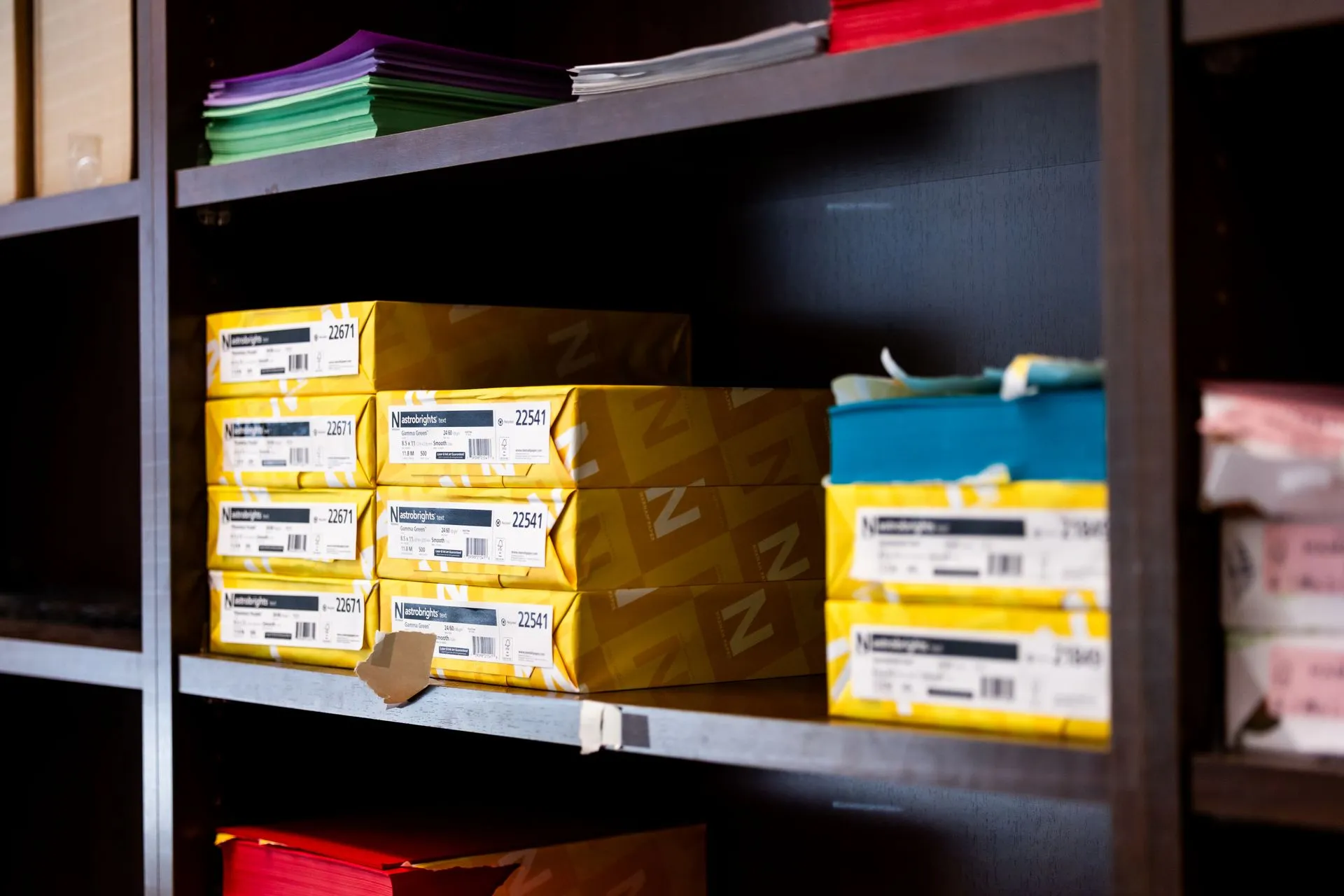
Singapore’s humidity can affect many office consumables, including paper. While paper may look unchanged at first, exposure to moisture can gradually affect its texture and handling.
To keep paper in better condition, businesses should:
- store paper in a dry indoor area
- avoid placing paper directly against walls or floors
- keep unused reams sealed until needed
- avoid storing paper near windows or damp corners
- rotate stock so older paper is used first
For offices that store larger quantities of paper or consumables, humidity control may become part of broader supply management. Businesses handling storage-sensitive items may also consider related humidity control solutions where appropriate.
Reliable Printing Paper Supply for Office and Commercial Use
When managing office paper procurement, the real challenge is not just finding paper when stock runs low, but maintaining a consistent supply that supports daily operations over time. Frequent small purchases or inconsistent sourcing can gradually increase costs, reduce stock visibility and disrupt normal workflows.
At WholesaleSupplies.sg, we support organisations with commonly used office paper formats suitable for everyday printing, administrative use and bulk purchasing requirements.
Businesses sourcing paper for routine office use may explore our printing paper range for commonly used workplace paper formats.
For businesses that rely heavily on daily document printing, comparing available A4 paper supplies can also help maintain a more consistent supply of standard office paper.
For smooth and dependable everyday document printing, organisations may also consider Mei Cheng A4 paper for routine operational needs.
Final Thoughts
Choosing an office paper supplier Singapore businesses can rely on allows organisations to manage paper procurement with greater consistency, especially when printing is part of daily operations.
By reviewing paper size, GSM, stock levels and purchasing frequency, businesses can make more informed decisions instead of relying on last-minute orders.
For businesses looking to streamline their paper supply, reach out to us via WhatsApp can be a practical next step to check current stock availability, suitable paper formats, bulk pricing and delivery arrangements.